Have you ever watched a beautifully decorated cake and thought, “Wow, I wish I could do that”? Maybe it was at a wedding, a birthday, or even scrolling through Instagram where cakes looked more like art than dessert. The truth is—fondant decorating might look intimidating, but with the right tips, tools, and a little patience, you can do it too.
I still remember the first time I rolled fondant. It was sticky, lumpy, and kept tearing apart. I almost gave up and thought, “Maybe fondant is just not for me.” But over time, I picked up the tricks professionals use—and suddenly, what once felt impossible became fun and rewarding. Today, I want to share those fondant decorating tips for beginners so you don’t have to go through all the messy trial-and-error I did.
By the end of this guide, you’ll not only know how to decorate with fondant like a pro but also feel confident enough to start your own decorating adventure.
Table of Contents
- Introduction to Fondant
- Types of Fondant: Which One Should You Use?
- Essential Tools for Fondant Beginners
- Preparing Your Cake Before Fondant
- How to Properly Roll Fondant
- Covering a Cake with Fondant (Step-by-Step)
- Common Mistakes Beginners Make with Fondant
- Decorating Ideas for Beginners
- Simple Shapes
- Ruffles
- Bows & Ribbons
- Flowers
- Coloring and Flavoring Fondant
- Storage and Handling Tips
- Troubleshooting Fondant Problems
- Advanced Beginner Tips to Level Up
- Final Words of Encouragement
- Frequently Asked Questions (FAQs)
1. Introduction to Fondant
If buttercream is the cozy comfort food of cake decorating, fondant is the high-fashion runway look. It gives cakes that smooth, polished finish you often see in bakeries or cake competitions.
Fondant is essentially a sugar dough made from sugar, water, gelatin (sometimes), and glycerin. It can be rolled out and draped over cakes, or molded into decorations like flowers, bows, and cute figurines.
Why is fondant so popular?
- It gives cakes a professional, flawless finish.
- It’s versatile—you can make almost any shape.
- It stays stable for longer than whipped cream or buttercream.
- It’s a blank canvas for creativity.
So if you’re a beginner wondering whether fondant is worth trying—the answer is YES. With a few fondant decorating tips, you’ll surprise yourself.
2. Types of Fondant: Which One Should You Use?
Not all fondant is created equal. Before you roll, you need to know the different kinds:
1. Rolled Fondant
This is the most common type. You roll it flat and drape it over cakes for that smooth finish.
- Best for: Covering cakes, making decorations.
- Texture: Soft, pliable, dough-like.
2. Poured Fondant
A liquid fondant used for covering petit fours, éclairs, or doughnuts.
- Best for: Small pastries.
- Texture: Smooth, glossy glaze.
3. Gum Paste
Technically not fondant, but often used alongside. Gum paste dries hard and is perfect for flowers and details.
4. Modeling Chocolate
Chocolate mixed with corn syrup, often used for sculpting. Works great with fondant.
Beginner Tip: Stick to rolled fondant when starting. It’s easy to handle and gives the classic cake look.
3. Essential Tools for Fondant Beginners
Before diving in, let’s set up your toolkit. Don’t worry—you don’t need everything at once. A few essentials go a long way.
- Fondant Rolling Pin (smooth, non-stick)
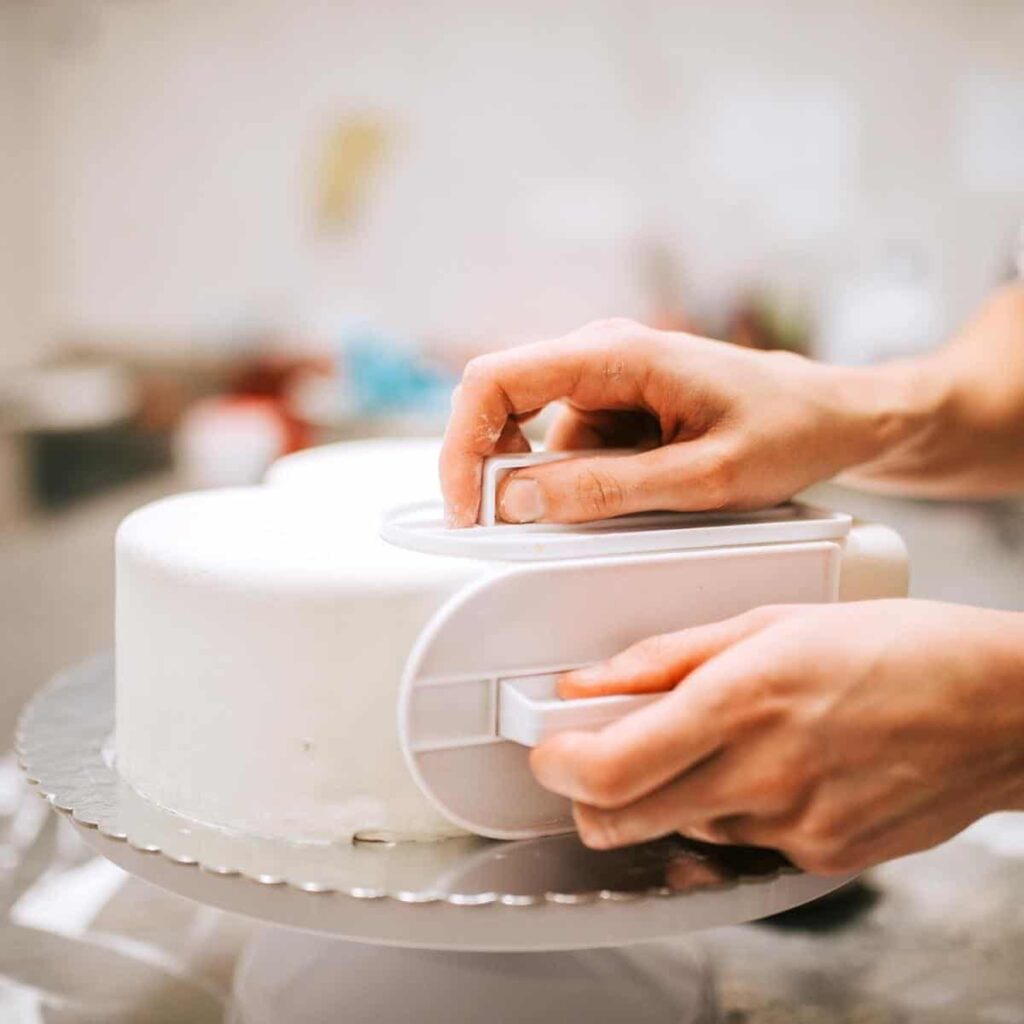
- Cake Smoother (to press fondant flat on cakes)
- Sharp Knife or Pizza Cutter (for clean edges)
- Cornstarch or Icing Sugar (to prevent sticking)
- Fondant Cutters (for shapes like hearts, stars, flowers)
- Turntable (makes decorating easier)
- Small Brushes (to paint edible glue or luster dust)
As you advance, you can add embossing mats, silicone molds, and impression tools. But for now—keep it simple.
4. Preparing Your Cake Before Fondant
Here’s a big secret: fondant only looks good when the cake underneath is smooth. Imagine laying a bedsheet on a lumpy mattress—it won’t look neat. Same with fondant!
Steps to Prepare:
- Bake and cool your cake completely. Warm cakes melt fondant.
- Trim the cake. Level the top so it’s flat.
- Apply a crumb coat. Spread a thin layer of buttercream (or ganache). This locks in crumbs and acts as “glue” for the fondant.
- Chill the cake. A firm cake is easier to cover.
Pro Tip: Ganache works even better than buttercream as a base because it firms up smoothly.
5. How to Properly Roll Fondant
Rolling fondant is where beginners usually struggle. Too thin, and it tears. Too thick, and it looks heavy.
Steps:
- Dust your surface with cornstarch or icing sugar.
- Knead fondant until soft and pliable. (If it cracks, warm it slightly in your hands.)
- Roll evenly. Use a large rolling pin, rolling from the center outwards.
- Check thickness. Aim for 1/8 inch (about 3–4mm).
- Measure your cake. Make sure the rolled circle is big enough to cover the top + sides.
Beginner Tip: Lift and turn the fondant as you roll to prevent sticking.
6. Covering a Cake with Fondant (Step-by-Step)
This is the magical part where your cake goes from “homemade” to “professional.”
Steps:
- Lift the fondant. Use your rolling pin to gently pick it up.
- Drape over cake. Place it in the center, letting it fall down the sides.
- Smooth the top. Use your hands or a cake smoother.
- Work down the sides. Lift and smooth gently to avoid pleats.
- Trim the edges. Use a knife or pizza cutter.
Troubleshooting:
- Cracks? Rub lightly with shortening.
- Air bubbles? Pop with a pin and smooth.
7. Common Mistakes Beginners Make with Fondant
Even pros make mistakes—but knowing them ahead saves you time.
- Rolling too thin → leads to tears.
- Skipping the crumb coat → fondant won’t stick.
- Not kneading enough → fondant cracks.
- Using too much cornstarch → fondant dries out.
- Covering a warm cake → fondant melts.
8. Decorating Ideas for Beginners
You don’t need to start with complicated sugar roses. Try these simple but stunning ideas:
1. Basic Shapes
Use cutters for stars, circles, hearts. Stick them on with edible glue.
2. Ruffles
Cut strips of fondant and ruffle edges with a ball tool. Layer around cake.
3. Bows & Ribbons
Roll strips, fold into loops, and pinch the center for bows.
4. Flowers
Start simple: daisies, roses, or blossoms. Use cutters or hand-shape petals.
Story Tip: I still remember the first fondant rose I made—it looked more like a cabbage. But with practice, I could craft roses delicate enough for wedding cakes. Don’t worry if yours aren’t perfect at first; each one gets better.
9. Coloring and Flavoring Fondant
White fondant is like a blank canvas. Here’s how to jazz it up:
- Gel Food Colors → Best choice (won’t change consistency).
- Powdered Colors → Great for dusting effects.
- Avoid Liquid Colors → Makes fondant sticky.
For flavor, knead in extracts (vanilla, almond, lemon) for subtle taste.
10. Storage and Handling Tips
Fondant dries quickly. Keep it soft with these tips:
- Wrap unused fondant tightly in plastic wrap.
- Store in airtight container.
- Never refrigerate—it sweats.
- If fondant hardens, microwave for 5 seconds and knead.
11. Troubleshooting Fondant Problems
- Fondant too sticky? Add cornstarch.
- Fondant too dry? Add a tiny drop of shortening.
- Tears? Smooth with warm hands or patch with extra fondant.
- Elephant skin (cracks)? Knead with shortening before rolling.
12. Advanced Beginner Tips to Level Up
Once you’ve mastered basics, here’s how to improve:
- Use textured mats for designs.
- Try marbled fondant (mix two colors slightly).
- Experiment with ombre cakes (gradual color fade).
- Play with gold luster dust for a glam effect.
13. Final Words of Encouragement
If you feel nervous—remember, every expert decorator started as a beginner with cracked fondant and lopsided cakes. Decorating is about progress, not perfection.
With these fondant decorating tips for beginners, you’ll soon be making cakes that not only taste good but also look breathtaking. And trust me—when you bring out your first fondant-covered cake at a party, the reactions will make every bit of practice worth it.
14. Frequently Asked Questions (FAQs)
Q1: Is fondant hard to work with for beginners?
At first, yes. But with practice and the right tips, it becomes second nature.
Q2: Can I make fondant at home?
Yes! Marshmallow fondant is a beginner-friendly DIY version.
Q3: How long does fondant last?
Wrapped and stored properly, fondant lasts 1–2 months.
Q4: Can I put fondant in the fridge?
Avoid it. Refrigeration makes fondant sweat.
Q5: What’s the best buttercream under fondant?
American buttercream or ganache—both give a firm base.
Q6: Why does my fondant crack?
It’s too dry. Knead with shortening.
Q7: Can I add flavors to fondant?
Yes—vanilla, almond, or lemon extracts work beautifully.
Q8: What’s the difference between fondant and gum paste?
Fondant stays soft; gum paste dries hard (great for flowers).
Q9: How thick should fondant be?
About 1/8 inch (3–4mm).
Q10: How do I stick fondant pieces together?
Use edible glue or a dab of water.